The Cultural Identity Programme is the heart of Project Kamarakoto — a living, active initiative documenting and preserving Pemón culture, language, and oral history before it is lost. What began as a vision has become an operational programme, generating irreplaceable recordings, a growing digital archive, and deep community engagement across the Kamarata Valley.
The Elder Interview Series
Conceived and led by Isabel Barton, the elder interview series is the centrepiece of the Cultural Identity Program. Isabel films Pemón elders in their communities, with Hortensia Berti — a Kamarakoto community advisor and direct descendant of the legendary chief Alejo Calcaño — conducting interviews in the Pemón language.
The recordings cover spiritual songs and chants, oral history, land boundaries, sacred knowledge, traditional practices, and historical events. Several of the elders interviewed have since passed away. Their voices now exist only in these recordings — which are, as a result, among the most valuable cultural documents the project has produced.
Communities across the valley are actively requesting screenings of the completed interviews. This grassroots demand is itself a powerful signal: this is not a passive community receiving outside attention, but one actively reclaiming its own cultural heritage.
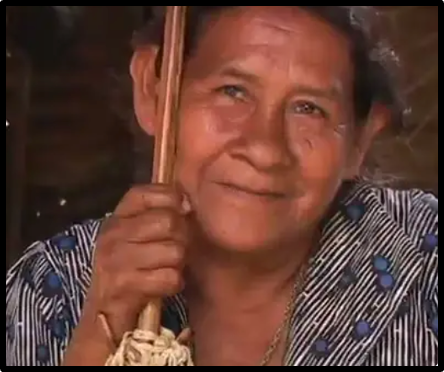
Photo: Isabel Barton. Delia, Hortensia's aunt with Saronge
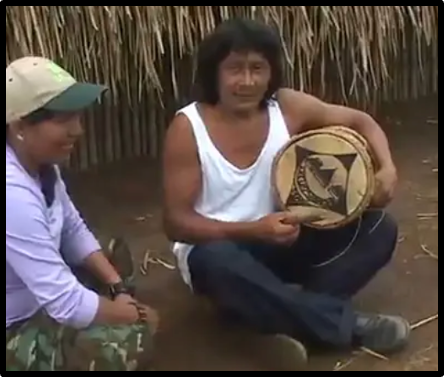
Photo: Isabel Barton. Hortensia with Inocencio and his drum
The Digital Archive – kamarakoto.org
A very important new project and a work in progress. The Cultural Identity Program will have a dedicated digital home: kamarakoto.org — a community-controlled digital heritage platform where the Pemón of Kamarata Valley own, govern, and grow their own cultural and linguistic intellectual property.
The platform will house a few growing collections:
The video archive of Elder Interviews and cultural documentation
A digitized version of the first Pemón study entitled: Los Indios Kamarakotos, authored by G.G. Simpson in 1939.
The photo archive anchored by the work of Pemón photographers
A trilingual Pemón/English/Spanish Living Dictionary with audio recordings — the first of its kind in a publicly accessible digital format
The platform will likely be governed by the CCK Board of Directors. The community does not simply appear on this platform — they run it.
Conceived and led by Isabel Barton, the elder interview series is the centrepiece of the Cultural Identity Program. Isabel films Pemón elders in their communities, with Hortensia Berti — a Kamarakoto community advisor and direct descendant of the legendary chief Alejo Calcaño — conducting interviews in the Pemón language.
The recordings cover spiritual songs and chants, oral history, land boundaries, sacred knowledge, traditional practices, and historical events. Several of the elders interviewed have since passed away. Their voices now exist only in these recordings — which are, as a result, among the most valuable cultural documents the project has produced.
Communities across the valley are actively requesting screenings of the completed interviews. This grassroots demand is itself a powerful signal: this is not a passive community receiving outside attention, but one actively reclaiming its own cultural heritage.
Living Dictionary
One of the most distinctive and hopefully fundable elements of the Cultural Identity Program is the development of a trilingual Pemón/English/Spanish Living Dictionary. Under the linguistic authority of community of one or two ex-Capitan’s, with contributions from CCK and local students, the dictionary will document Pemón words with audio recordings of native speakers, translations, and cultural context.
The dictionary is a resource for the community, for researchers and linguists internationally, and for the growing number of ecotourists visiting Angel Falls and Kamarata Valley who would love to understand the place through the eyes of the people who have lived there for centuries.
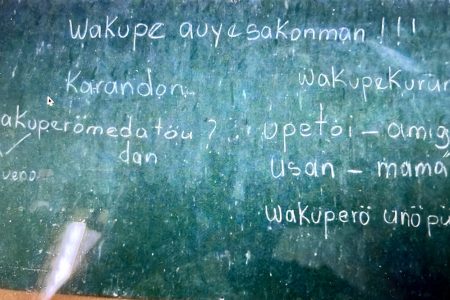
Example of work to be done for a Living Dictionary
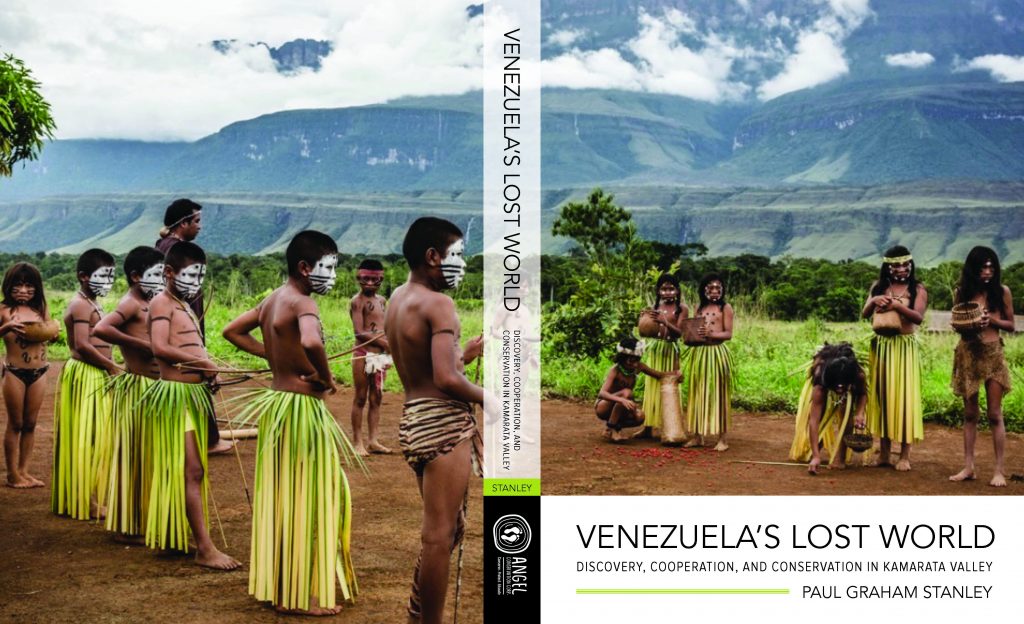
Book – Venezuela’s Lost World: Discovery, Cooperation and Conservation in Kamarata Valley
Venezuela’s Lost World: Discovery, Conservation and Cooperation in Kamarata Valley, written, compiled and edited by Paul Graham Stanley, is the first book to bring stories of conservation, exploration, and Indigenous community life in Canaima National Park under one cover. Paul of course, is the President of ACC and FE as well as board member of The Jimmie Angel Historical Project (JAHP) and Biokryptos.
The bilingual manuscript — complete in both English and Spanish — is currently in the editorial process.
The book will form part of the CCK’s Library and will be made available in digital format so that the Pemón community can access their own documented history remotely via Starlink.
Discovering and Documenting the Collection of Artifacts
Angel Conservation has found a “treasure” in the files of the American Museum of Natural History in New York. 74 original artifacts of the Kamarakotos are located inside a secure vault in the Museum. They have been barely touched since G.G. Simpson brought them in 1939, until the Foundation found them and started the photo documentation in 2005. That same year the Kamarakotos had the opportunity to see a few pictures and they showed their interest with a heated chorus and emotional voices.
The Foundation has prepared a file with all the digital pictures of the artifacts which are part of the collection and they will be given to the Kamarakotos.
Recompilation and Delivery of Pemón Cultural and Historic Records
For the first three years, the Foundation gave to the tribe books, pictures, notes, literature and other materials about their land and culture.
The Foundation has access, with author rights, to three important photo files that talk about the history and documentation of the Kamarakotos and the Salto Angel. From those files they will make copies that will be part of the Kamarakotos heritage:
Pictures from Gustavo Heny, at the moment presently owned by Enrique Lucca, taken during the historical expedition of Jimmie Angel with his plane El Rio Caroni on top of Auyántepui. During the trip the plane got “stuck” in the clay on the top of the tepui.
Pictures from Jimmie Angel’s family, owned by the Jimmie Angel Historical Project, who work hand in hand with the Etnika Foundation and Angel Conservation.
Pictures from Ruth Robertson’s exhibition about the Kamarakotos, presently in the museum of the University of Texas, besides other universities and museums but never before seen in Venezuela.
Those pictures / records reside nowadays in the Harry Ransom Humanities Research Center at the University of Texas. Through an initiative of members of the Foundation, Patricia Hubbard executor of the literary works of Ruth Robertson has given a copy of each picture of the mentioned exhibition to the tribe. We have given them an album with copies of those pictures and we are waiting to find a suitable resting place for these in the Valley so we can then transfer all of these materials.
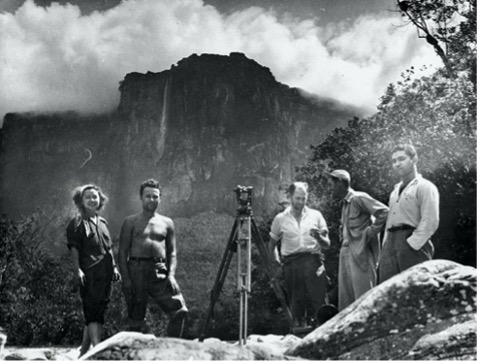
Courtesy Harry Ransom Center Ruth Robertson (American, 1905–1998), Members of the Angel Falls Expedition, 1949. From left Ruth Robertson, Alejandro Laime, Perry Lowrey, Ernest Knee, Enrique Gómez. Ruth Robertson Papers and Photography Collection.
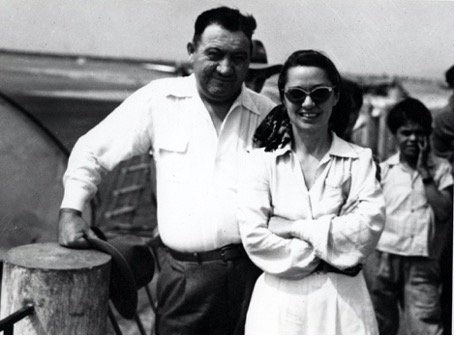
Courtesy Harry Ransom Center Ruth Robertson (American, 1905–1998). Jimmie Angel and Ruth Robertson, Maracaibo, Zulia, 1948. Ruth Robertson Papers and Photography Collection.
Publication / Republication of Books
Library:
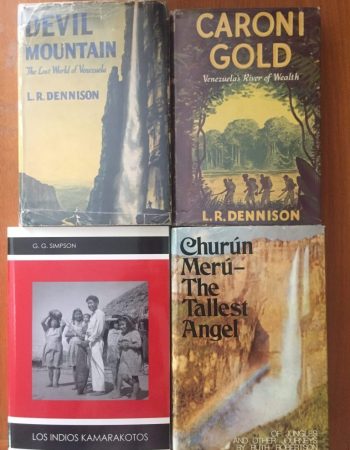
Los Indios Kamarakotos – reproduced and distributed throughout Kamarata Valley, printed in 1939, an in-depth anthropological study of the Pemón by GG Simpson. A digital version is available for the archives
Uyeremu Dapon – a Pemón children’s book was designed, printed and published in February 2020 and distributed throughout the local communities
Rivers of Gold by Jimmie Angel’s niece – Karen Angel
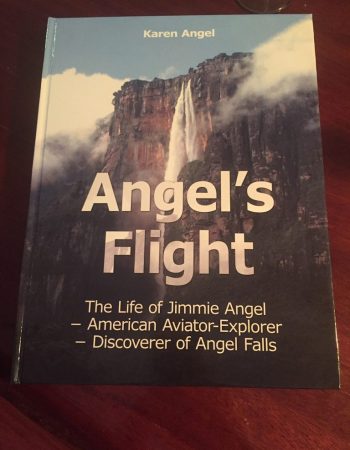
Angel’s Flight by Karen Angel
Operación Auyantepui by Jesús Aveledo
Churún Merú – The World’s Tallest Angel by Ruth Robertson
Caroni Gold: Venezuela’s River of Gold by L.R Dennison
Various Books for the CCK's Library
Angel's Flight - The Life of Jimmie Angel by Karen Angel
~This page will be linked eventually to kamarakoto.org which we hope soon will be in production (April 2026)~