
Tepui Watch & Other Projects
Tepui Watch - Biokryptos
Tepui Watch is the flagship programme of Biokryptos (501(c)(3)), a not-for-profit organisation dedicated to cataloguing and conserving the unique biodiversity of Venezuela’s tepui mountains. Its mission: to survey the complete biodiversity of Auyántepui — the iconic table-top mountain directly above Kamarata Valley that houses Angel Falls, the world’s highest waterfall.
The Program
- Forested talus slopes
- Accessible trails
- Remote summit areas
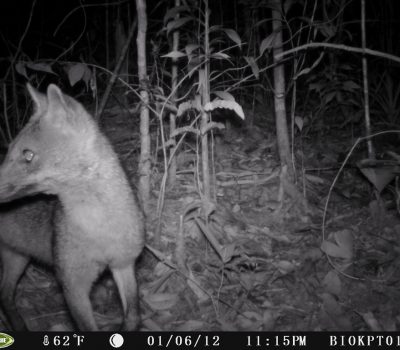
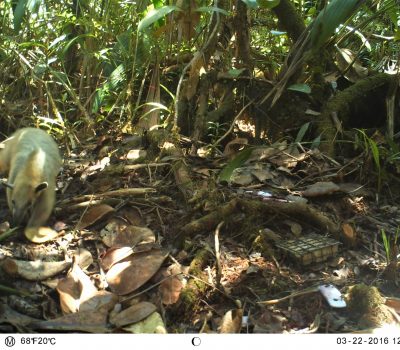
Tepui Watch is currently the only camera-trap study of its kind on any tepui summit.Since 2014, the programme has produced thousands of photographs documenting the fauna of Auyántepui. Confirmed findings include the puma (Puma concolor) on talus slopes, coatis, and endemic and lowland vertebrate species not previously formally documented on the summit — discoveries submitted for publication in peer-reviewed academic journals.
Tepui ecosystems are among the most climate-vulnerable on earth. The baseline biodiversity data generated by Tepui Watch will be essential for measuring and responding to habitat loss over the coming century. The methodology is designed to scale across the wider Pantepui ecoregion.
Indigenous Partnership
Tepui Watch’s connection to the Kamarakoto community is direct and essential. Pemón guides and community members are trained in camera trap deployment and monitoring — a genuine transfer of scientific technology and methodology to the Indigenous community.
Arturo Berti, Pemón Teacher and Guide, serves as Biokryptos’ lead investigator on the ground in Kamarata Valley.
Key People
Laszlo Barkoczy — CEO & Founder of Biokryptos; driving force behind the Tepui Watch programme.
Anthony Ippolito — Professor at DePaul University, Chicago; brings academic and scientific credibility to the programme’s peer-reviewed research.
Alberto Pomares — Field Program Manager and Photographer; a well-known Venezuelan photographer, avid naturalist, a seasoned Tepui explorer, Mr. Pomares uses his years of field work, expedition planning, and GIS analysis to assist the efforts of Biokryptos.
Arturo Berti — Pemón Teacher and Guide; Biokryptos’ lead investigator on the ground in Kamarata Valley.
Paul Graham Stanley — Member of the Biokryptos board of directors.
Please visit YouTube to hear what Biokryptos is involved with. Its very cool! www.biokryptos.org and Tepui Watch on YouTube
Interpretation Project
Already implemented. Through collaboration with Angel-Eco Tours, Inc. (specialists in ecotourism to the region) a Professor of Biology from Chicago, Anthony Ippolito, spent a week with the Pemón in Uruyén and Kavak before leading an educational tour to Angel Falls. Two of the “students” guides that Anthony spent time with accompanied the seven-day tour.
The goal was to educate the local Indigenous communities of the unique ecology and geology of the region and finer points that relate to tourism – this is a very broad description of a very involved project. Although intimate with their surroundings and familiar with the importance of the ecosystems around them, the Pemón often lack the depth of education and interpretive skills needed to deliver an emotional and intellectual experience to visitors to the area. A structured format and training from professionals of various disciplines was needed to integrate the local Pemón’s knowledge into a broader context and understanding of the area. This will incorporate many of the initiatives mentioned, such as the setting up and promotion of craft workshops and relating the original / authentic tribal dances as told by the elders, very different to those practiced in the present day.
National and international experts on interpretation and trail development will spend time with prospective Pemón tour guides and other stakeholders in the communities to educate them on the local ecology, history and intricacies that appeal to a broad spectrum of visitors to the national park area. This will of course feature the workshops at the proposed Cultural Centre / Community Centre as well as information regarding early explorers to the region.
Workshops
Like the Interpretation Project, “workshops” are also a form of “interpretation”
Art & Music Workshop
With the information that we get from the video documentary, we will start forming art and music workshops i.e.
- Art workshops that may include: ceramics, cotton clothing for men and women, hammocks, woven baskets, shoes made from the moriche, jewelry and wood carvings which are specifically for the elaboration of the Mureys (ritual benches in an animal forms).
Ceramic Workshop
There is only one family left in the Valley of Kamarata where women are still making ceramics in the old traditional way. There exists no effort to spread this art, although the tribe still uses the “ollas” to cook. The elaboration of the ceramics has a ritual to be followed. They get the clay from a unique place in the Valley. They go there with an offering to the Earth asking for permission to take out some clay, without looking back. Angel Conservation together with Fundación Etnika have close relationships with the women that take care of the ceramics.
Proposed is a ceramic workshop for the young people in the tribe so they will learn the art of the craft and the ceremony. From this workshop the Foundation will use the results in expositions and sales will showcase and present them to tourism programs in the region. Also, in this case the Foundation will use the process and the results of the workshops for tourism purposes.
Music Workshops and Musical Instruments
The music workshops will include the teaching of the different types of songs: Marik (magical songs that encourage the nature), the Tarenes (magical songs for the protection and medicine), and the songs to dance and have fun such as the Tukuy, the Parichara, the Amanau and the Sapara.
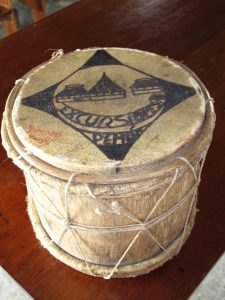
The musical instruments workshops include the elaboration and interpretation of themselves: the drum, the waronga and the kobey. Every one of them is made from materials that have a meaning and specific results. That knowledge is almost disappearing.
Restoration of a Cemetery in Canaima
In this hidden cemetery in Canaima are buried Charles Baughan and Alexsandrs Laime, both early explorers of the area.
Charles Baughan (1901-1956)
In 1947, another U.S bush pilot a native of Georgia and a good friend of Jimmie Angel’s discovered Canaima Lagoon and saw its potential to build a tourist camp there. According to Ruth Robertson’s account of Charlie in her book “Churún Meru-The Tallest Angel” – “Charles Baughan probably remains best known for opening up Icabarú near the border between Venezuela and Brazil and for developing what is known as the Canaima resort at Hacha Falls and lagoon.
He and his wife Mary died in a plane crash near Higuerote, Venezuela and was buried in his “dream resort” Canaima.
Photo of Charles Baughan (1901-1956).
Courtesy Harry Ransom Center Ruth Robertson (American, 1905–1998). Print scanned from Ruth Robertson’s book: Churún Meru, The Tallest Angel.
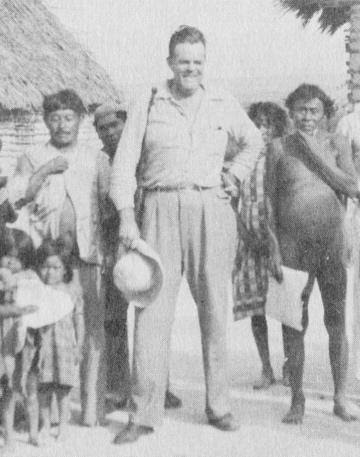
Aleksandrs Laime (1911-1994)
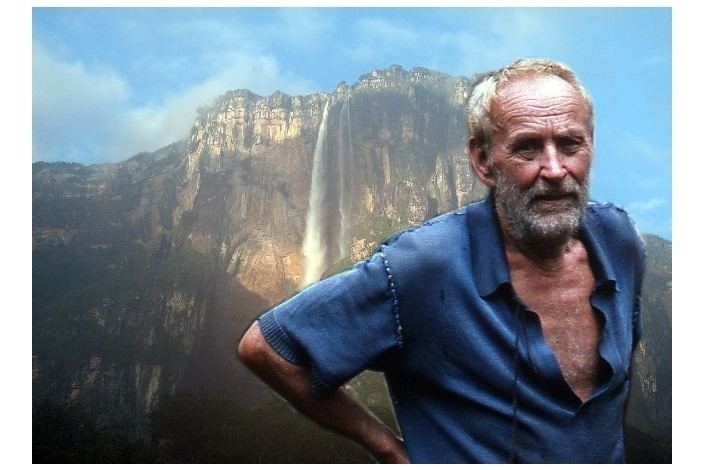
Also known as Alejandro Laime or Alexander Laime, he was a famous Latvian-born explorer. He is most noted for being the first recorded human to reach Angel Falls by foot and accompanied Ruth Robertson on her expedition.He reportedly established, together with Charles Baughan, the tourist camp of Canaima, created solely for the purpose of bringing tourists to Angel Falls. Laime became quite a recluse and lived 3-4 years at different “camps” on top of Auyántepui, moving each year to a different location. His Pemón friends would bring food to him once every so often so he could survive.
Laime came down the Churún River on March 20, 1994, to stockpile food and supplies for a few weeks, as he often did. He spoke to the wife of Ramon Jimenez, who was asking for him. He complained to her about chest pains, and said that he knew the end was near.
He is reported as saying that he wanted to climb Auyántepui one last time, to die up there. He then went to the nearby Waku Lodge, for a drink and died shortly thereafter in the bathroom of a heart attack.
For more information: “https://en.wikipedia.org/wiki/Aleksandrs_Laime\“